Case Study · Field Operations

Lotline

Every lot from dirt to green, on one record.

Industry

Irrigation, Field Operations

Client

A production irrigation contractor

Status

Working prototype, engagement in progress

Build

One static file, no backend

Caddo Ridge Irrigation is a demonstration contractor created by Agentify AI; every lot, person, builder, and document on these screens is invented, and the 192 site plans were drawn from scratch for the demo. The engagement this was built for is still in progress, so the client is not named here. The demo sign-in is demo / demo.

The Problem

The whole business runs on a spreadsheet nobody can open on a truck.

The reference system in this trade is a spreadsheet base: 470 job records carrying 337 hidden fields, no real search, no mobile at all, and permissions that are only edit or view. Its answer to six job functions is one table filtered six ways, which is exactly why the people who need it most, the crews, never open it.

The brief was to keep what that base gets right, the checkbox handoffs, the readiness gates, the per-job history, and fix what it gets wrong: six roles, six different products, one shared record, on a phone, in the sun, with gloves on.

The Solution

What Agentify AI Built

One record per lot, nine stages from intake to billing, and six people who each get a different screen over the same record.

1. The Record

One lot, nine stages, from intake through design, permit, schedule, install, backflow, and inspection to billing. Documents, readiness, crew, permit number, and backflow serial all hang off the same record, so nobody keeps a private copy and nobody has to ask which drawing is current.

2. The Six Screens

Not one screen filtered six ways. The crew lead gets a single run card with one green button and no dashboard at all. The superintendent gets gates and counts. The office gets a permit tracker. The owner gets throughput bars. The outside designer gets document rows and never sees payroll.

3. The Street at Once

Designers do not finish one lot, they finish a street. Drop the whole batch and the address is read out of each filename and matched to its lot with the reason stated. Sixteen of seventeen files from a real batch filed themselves at 99% confidence, and the odd one out was flagged for a human.

“The crew lead gets one green button. The owner gets throughput bars. The designer never sees payroll. Same lot, same record, six different products.”

Lotline, the promise

Inside the Product

The Actual Interface

Captured from the working prototype as it runs today: every screen is the real interface reading one shared record.
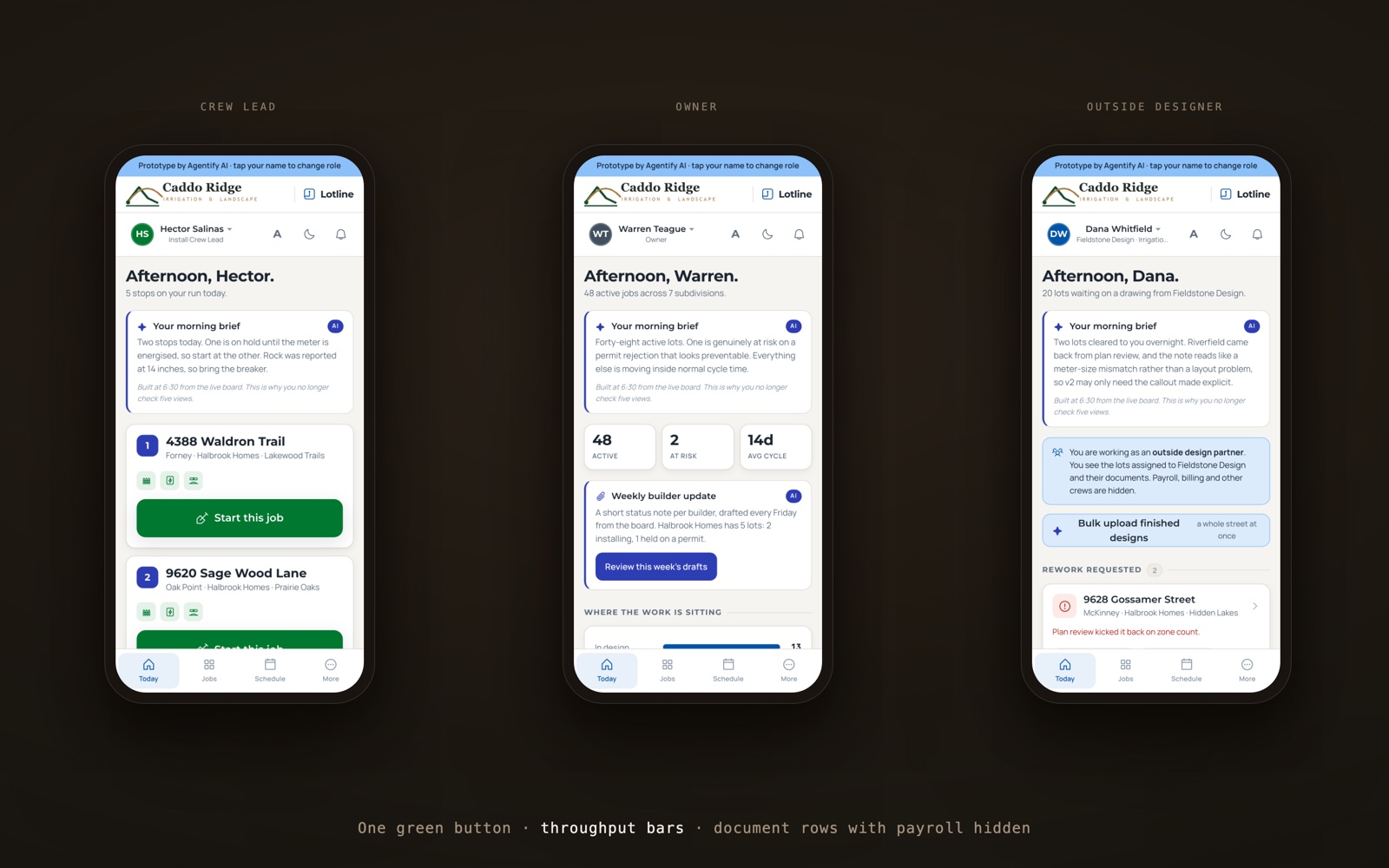
Six Lotline workspaces side by side: the crew lead's run card, the superintendent's gates, the office permit tracker, the owner's throughput bars, and the designer's document rows, all reading one lot record

Six Roles, Six Products · One record, six screens

The crew lead gets one green button, the owner gets throughput bars, and the outside designer gets document rows with payroll hidden.
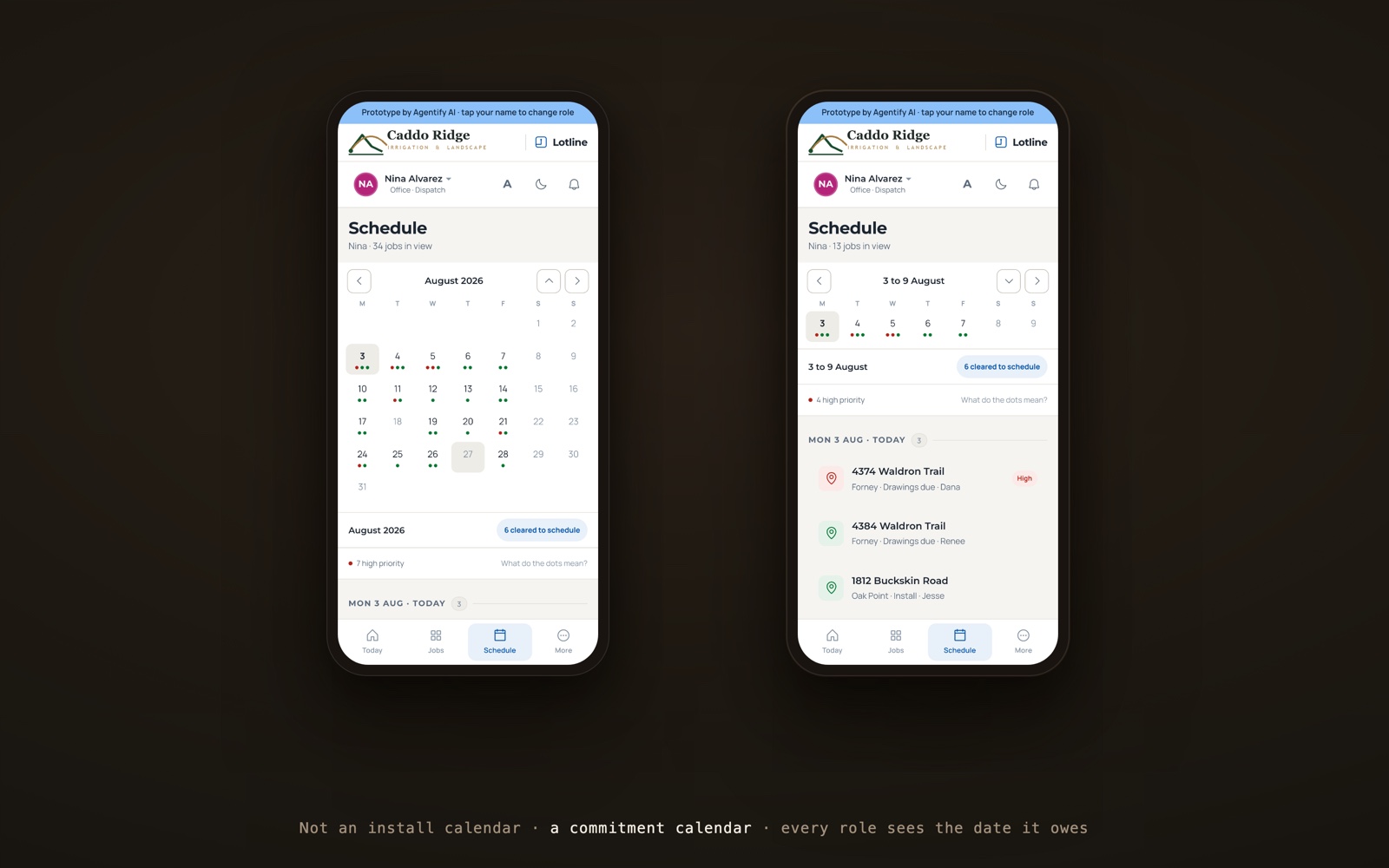
The Lotline commitment calendar: a week view where each role sees only the dates it personally owes

The Commitment Calendar · Every role sees the date it personally owes

Not the install calendar. Every role sees the date it personally owes, a week at a time or a month.
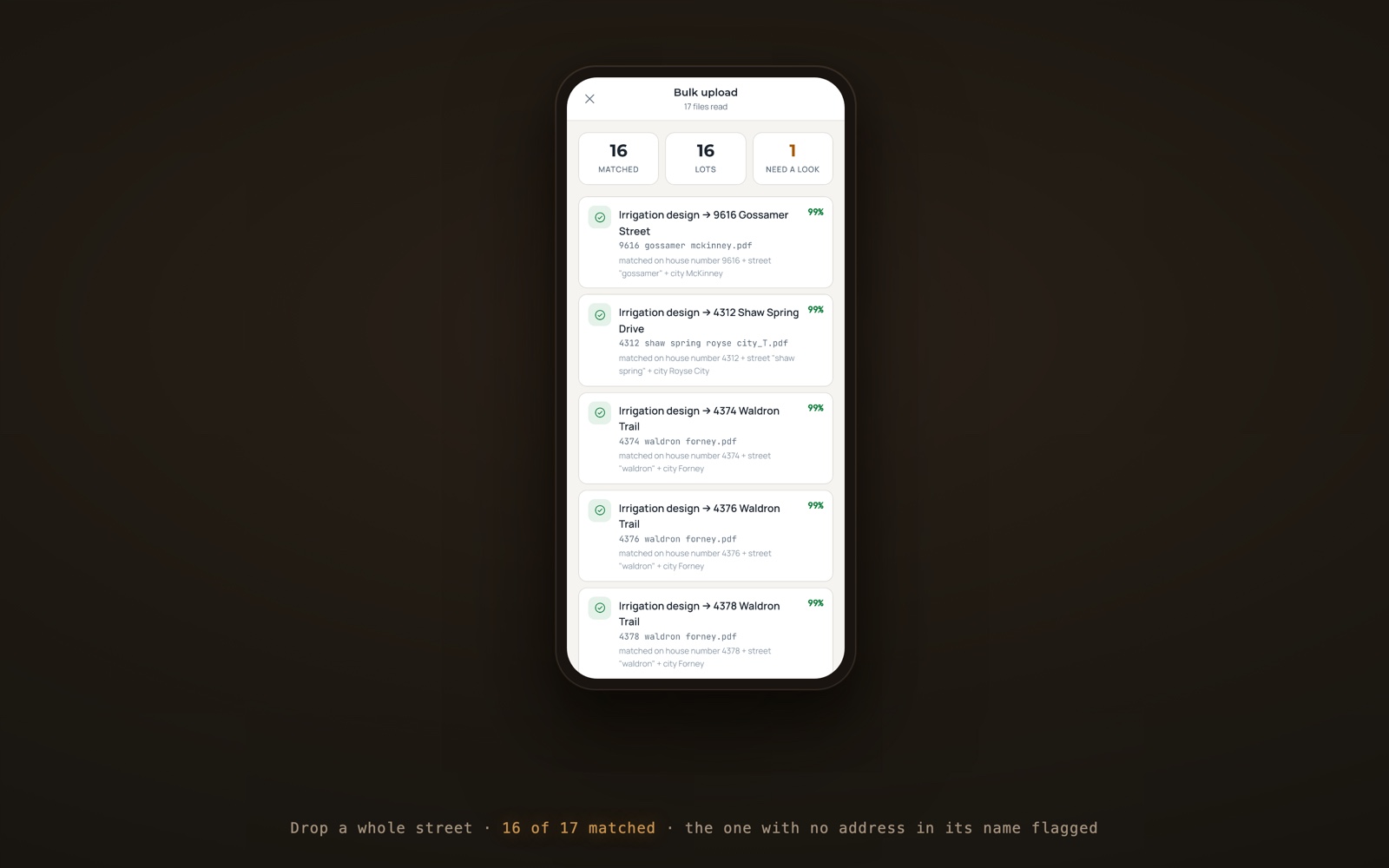
The Lotline bulk upload screen: a street of files dropped at once, each matched to its lot with the reason stated and one flagged for review

A Whole Street at Once · 16 of 17 filed themselves

Drop a batch and the address is read out of each filename, matched to its lot, with the reason stated in plain English.
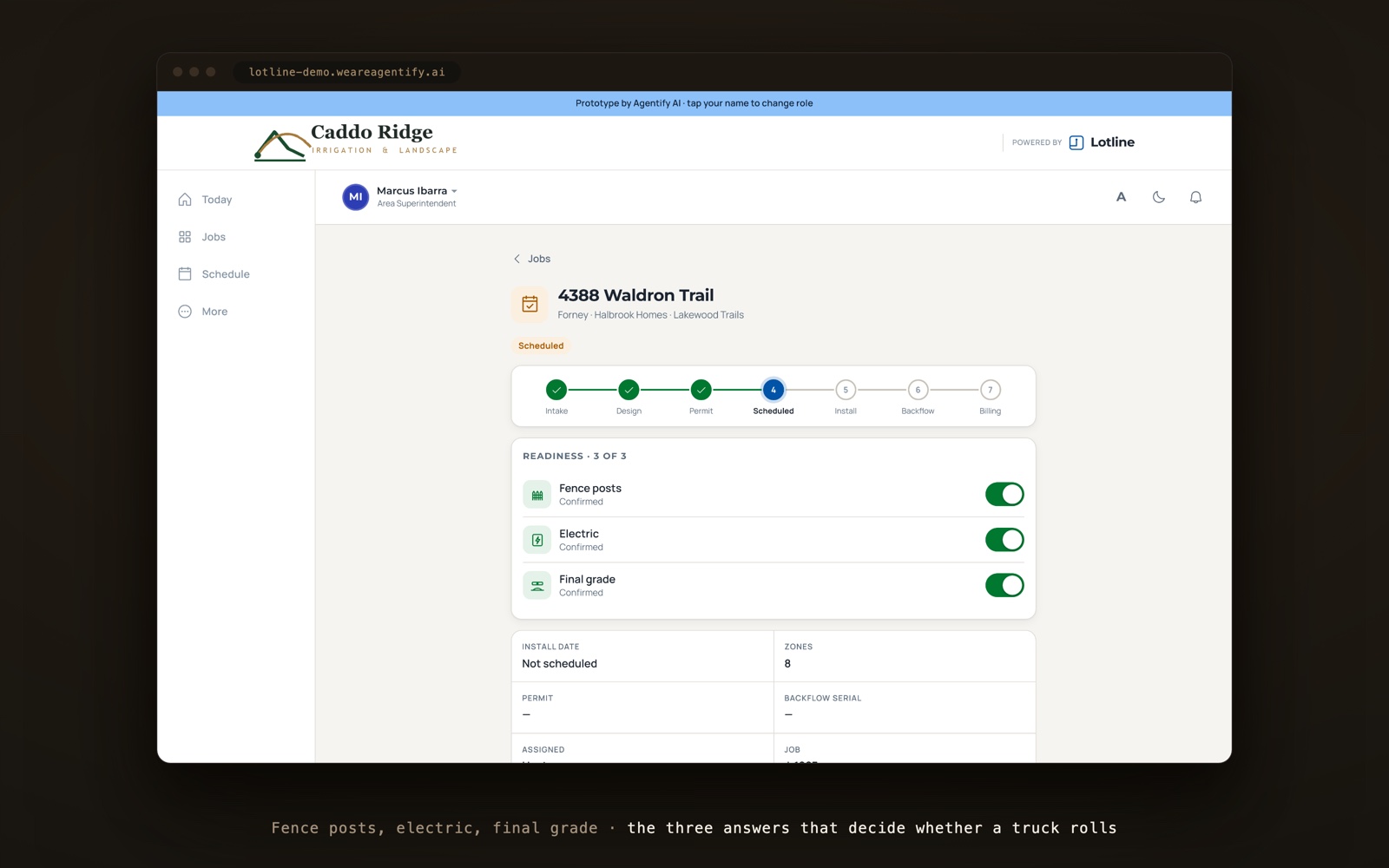
The Lotline readiness gates on a lot record: fence posts, electric, and final grade as three toggles

The Gates · Fence posts, electric, final grade

The three answers that decide whether a crew rolls or burns a day, on the record before the truck leaves the yard.
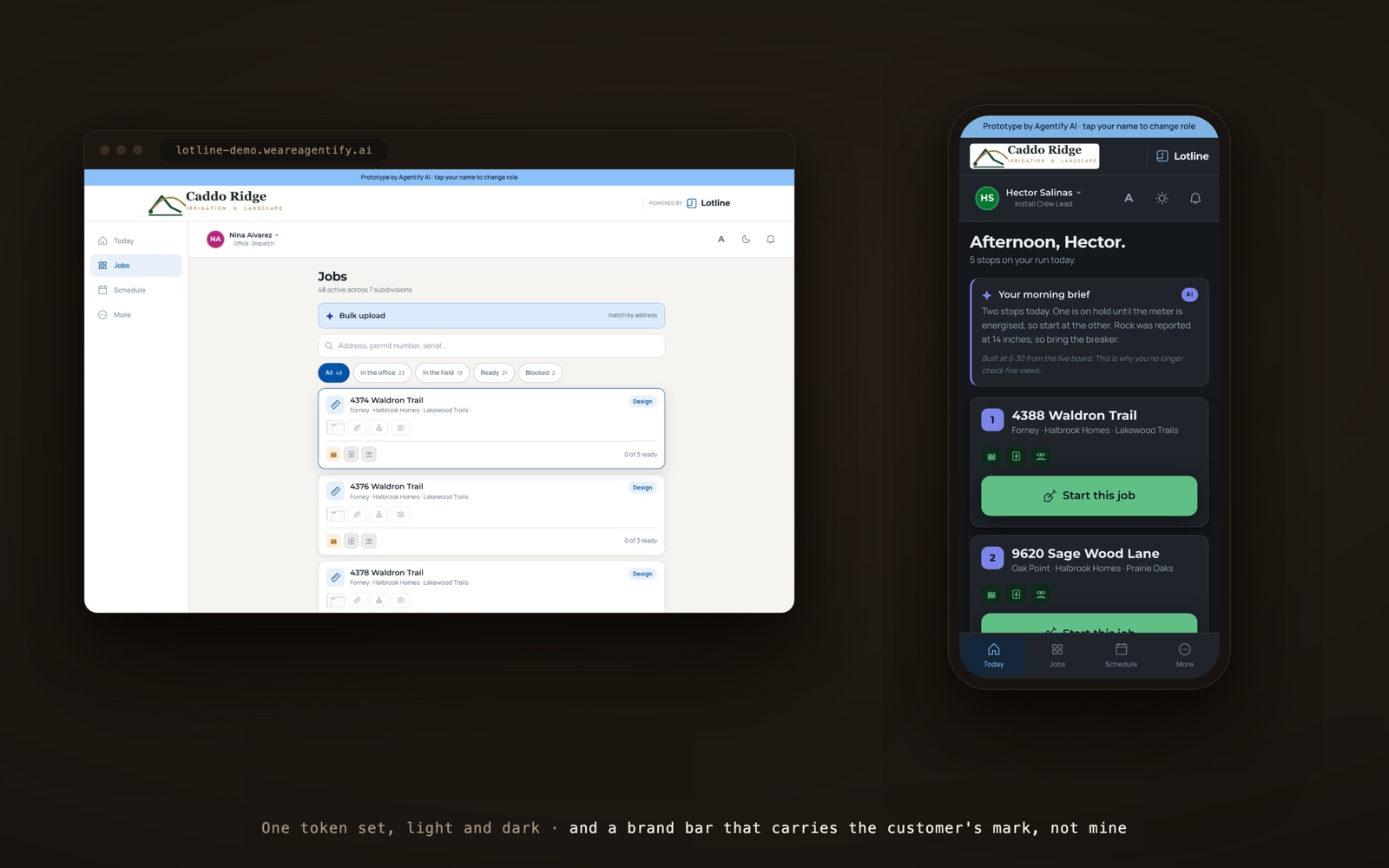
The Lotline product design system: one token set rendered in light and dark, with a brand bar carrying the demonstration contractor's mark

The Product · White label by design

One token set in light and dark, and a brand bar that carries the customer's mark beside the product's own.
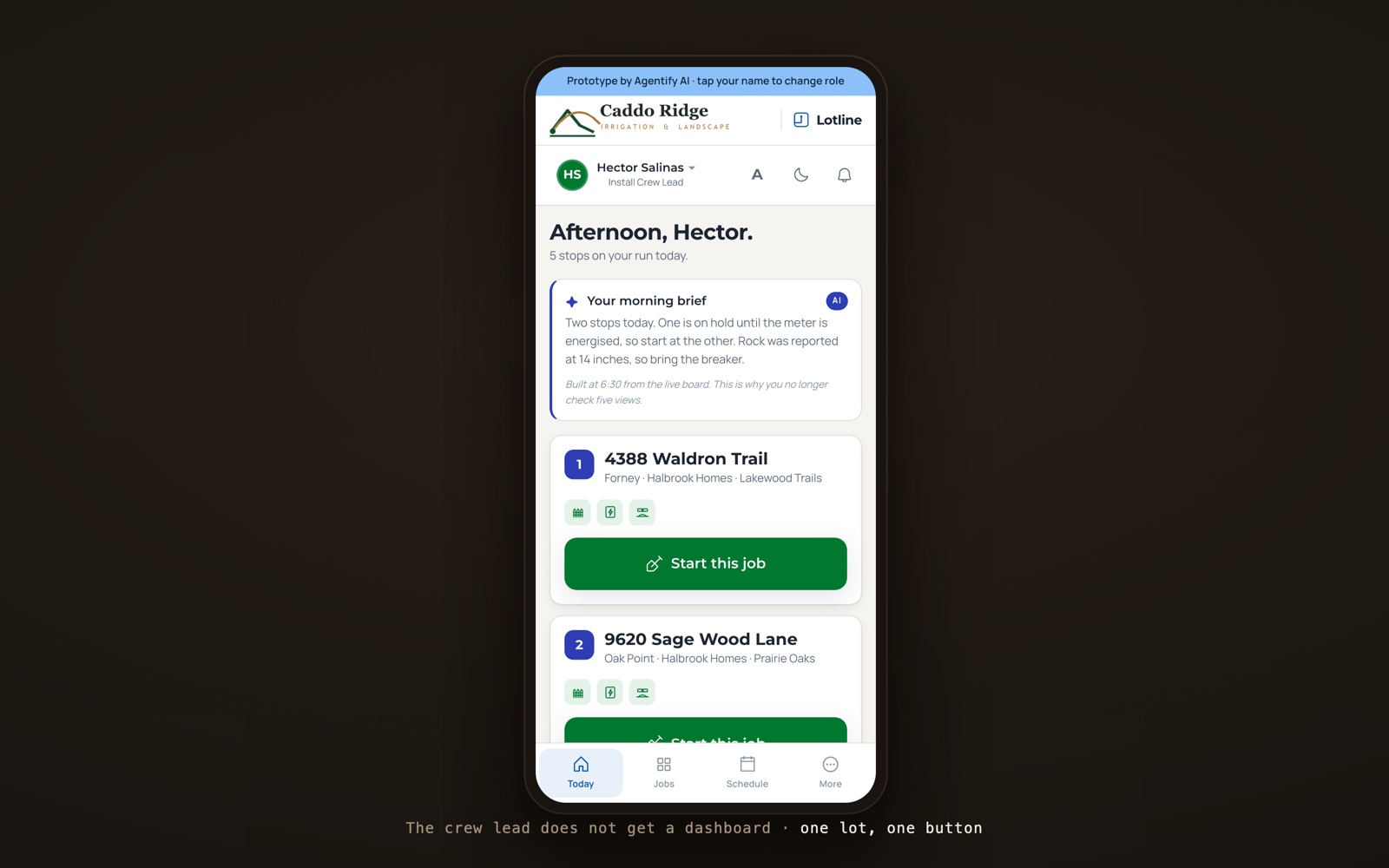
The Lotline crew screen on a phone: one run card, three readiness gates as icons, and one green start button sized for a gloved thumb

The Crew Screen

The crew lead does not get a dashboard.

This is the whole argument in one screen. The crew lead gets a single run card: the next lot, the three readiness gates as icons, and one green button sized for a gloved thumb. No charts, no counts, no filters. The owner reading the same record at the same moment sees throughput bars, and the outside designer sees document rows with payroll hidden. One record, six products.

6

Roles on one shared record

0

Charts on the crew screen

The Film

A Lot, From Dirt to Green

A production irrigation job filmed like a commercial, from open trench to watered lawn.

Poster frame of the Lotline film: a production lot with an open irrigation trench in a subdivision under construction

Tap to play · produced by Agentify AI for this study

The Outcomes

What Changed

48

Lots on the Board

48 lots across seven subdivisions, searchable by address, permit number, or backflow serial.

9

Stages, Intake to Billing

One stepper on every record, from intake through design, permit, schedule, install, backflow, and inspection to billing.

6

Roles, Six Different Products

Each role gets its own product over the same shared record, from one green button to throughput bars.

Six people, one record. Not one of them gets the same screen.

Your field ops could run on one record.

We will walk through Lotline in the demo, then map the same role-based board onto your trade.