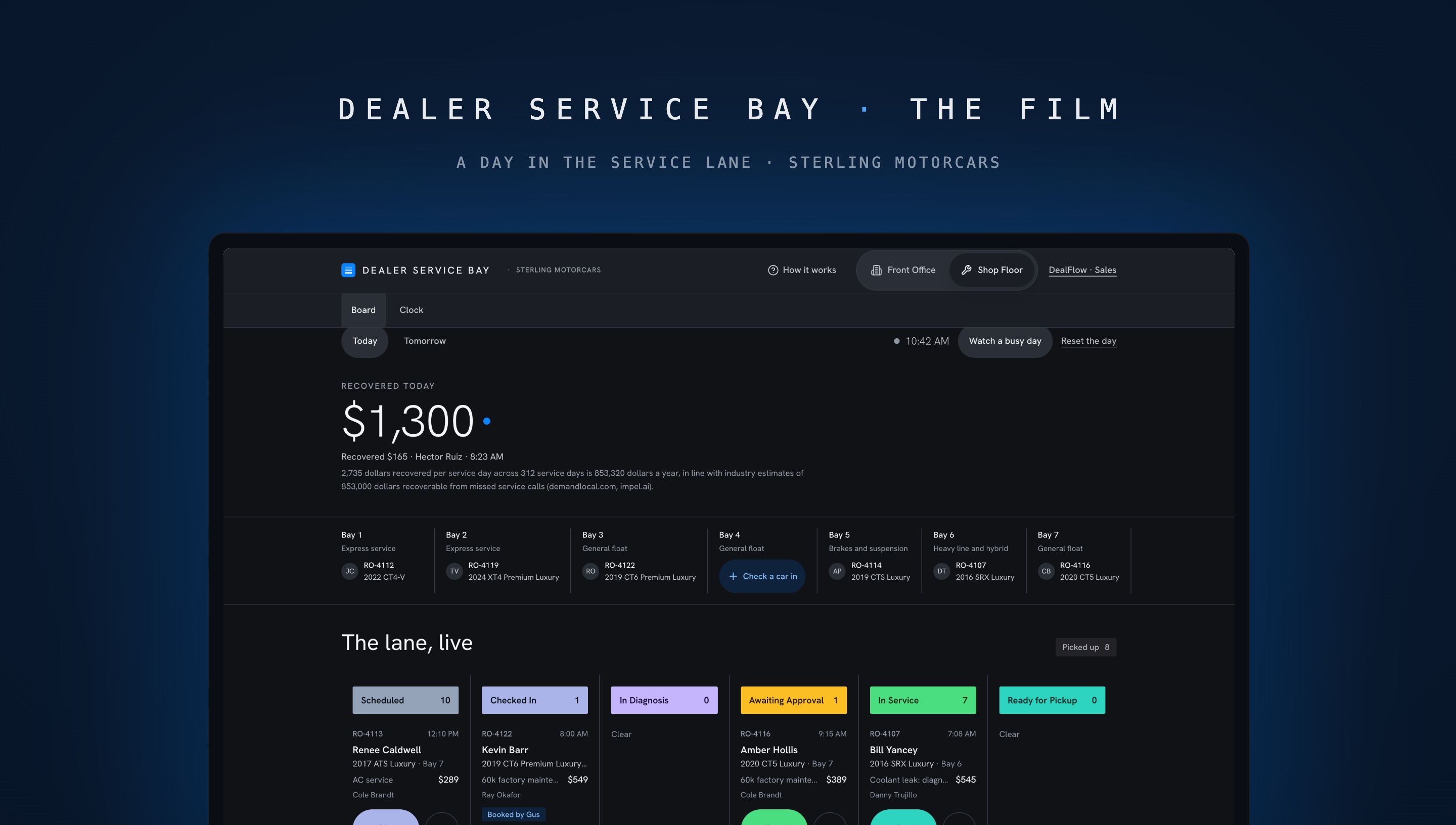
The store is dark. The phone rings. Gus books the bay.
Industry
Automotive Service
What We Built
Service ops platform, voice advisor
Status
Live working product
Stack
React · Gemini Live · Prisma
Sterling Motorcars is a demonstration store created by Agentify AI, an independent shop not affiliated with or authorized by Cadillac or General Motors. Every screen below is the actual product; the recovery and set-rate figures are published industry benchmarks (DemandLocal and Impel) modeled onto the demonstration store, not a customer's audited results.
The Problem
Every missed call to a service department is a booked bay that never happens. Industry studies put the recoverable money from missed service calls near $853,000 a year per store, and most stores recover none of it: after-hours callers hit voicemail, declined services scroll away in yesterday's tickets, and nobody can see the money leaving.
The fix is not another receptionist. It is a service lane that answers its own phone, prices every call it catches, and shows the store the money it almost lost.
The Solution
One store, two workspaces, and a voice advisor on the phones: the desk runs the day, the garage runs the bays, and Gus catches every call the store would have missed.
One toggle, two workspaces: a light Front Office for the desk and a dark Shop Floor for the garage, every control sized for a gloved hand. The advisor runs the whole day from a phone: check a car in, move it bay to bay, assign a technician, mark it picked up.
At 7:04 PM the store is dark and the phone rings anyway. Gus answers, quotes the brake job from server-priced services, checks real availability on the 20-minute slot grid, and books the bay. The appointment lands on tomorrow's schedule, flagged Booked by Gus.
The recovery queue replays the calls the store never picked up: 14 missed calls caught, called back within minutes, and priced, including $434 from one call before the doors opened. A follow-ups list then ranks every declined service by what a call tonight is worth.
“It is 7pm and the phone is ringing in a dark store. Gus picks up, quotes the brake job, and books the bay. The advisor reads the ticket in the morning.”
Dealer Service Bay, the promise
Inside the Product
Captured from the live product as it runs today: every screen is the real interface, and every booking Gus makes is validated by the server against the same slot grid the board reads.
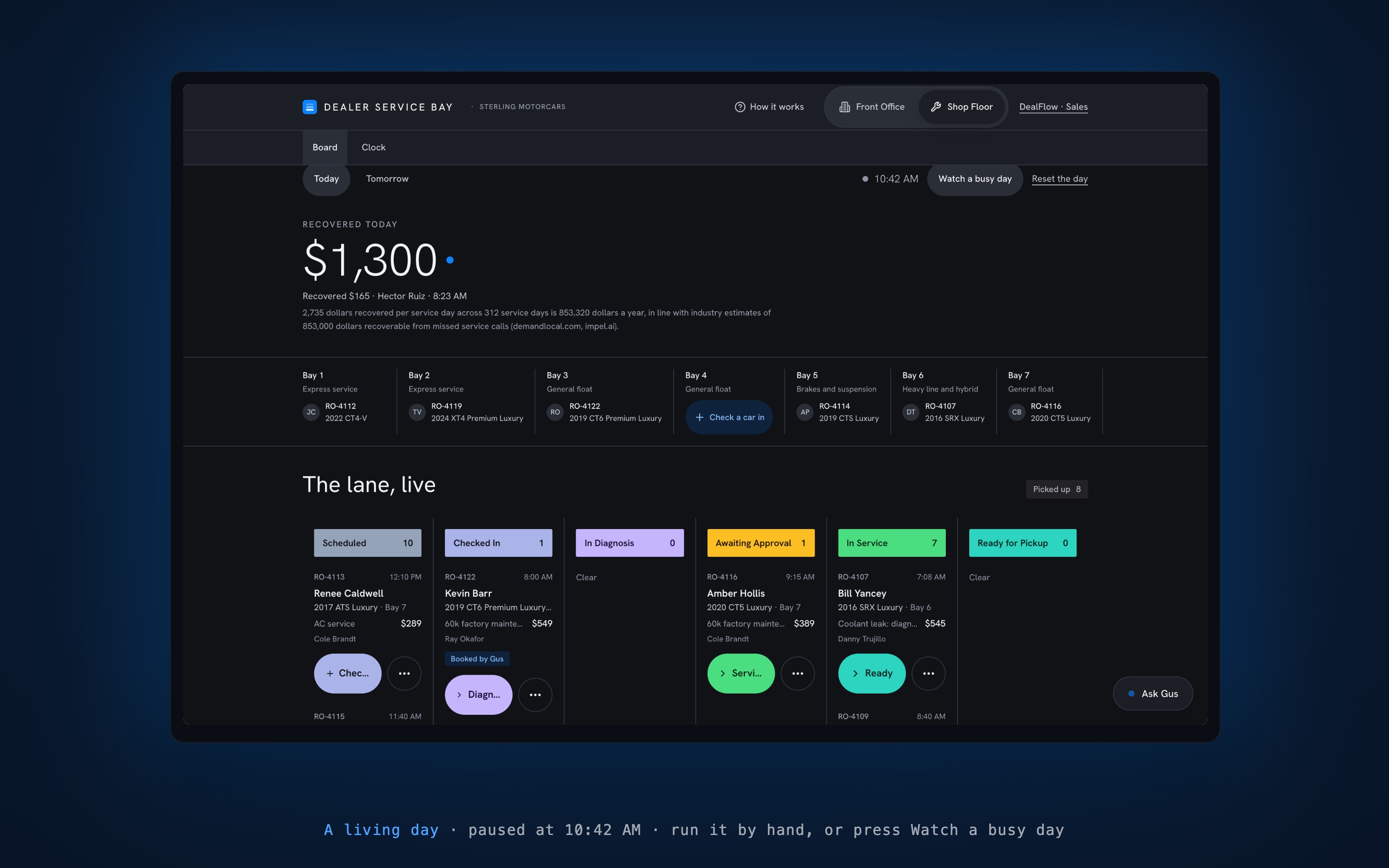
The Lane, Live · 30 repair orders, 10 bays
Six lanes from Scheduled to Ready for Pickup, run from a phone: check in, advance, assign, pick up. A Watch mode plays the rush on its own.
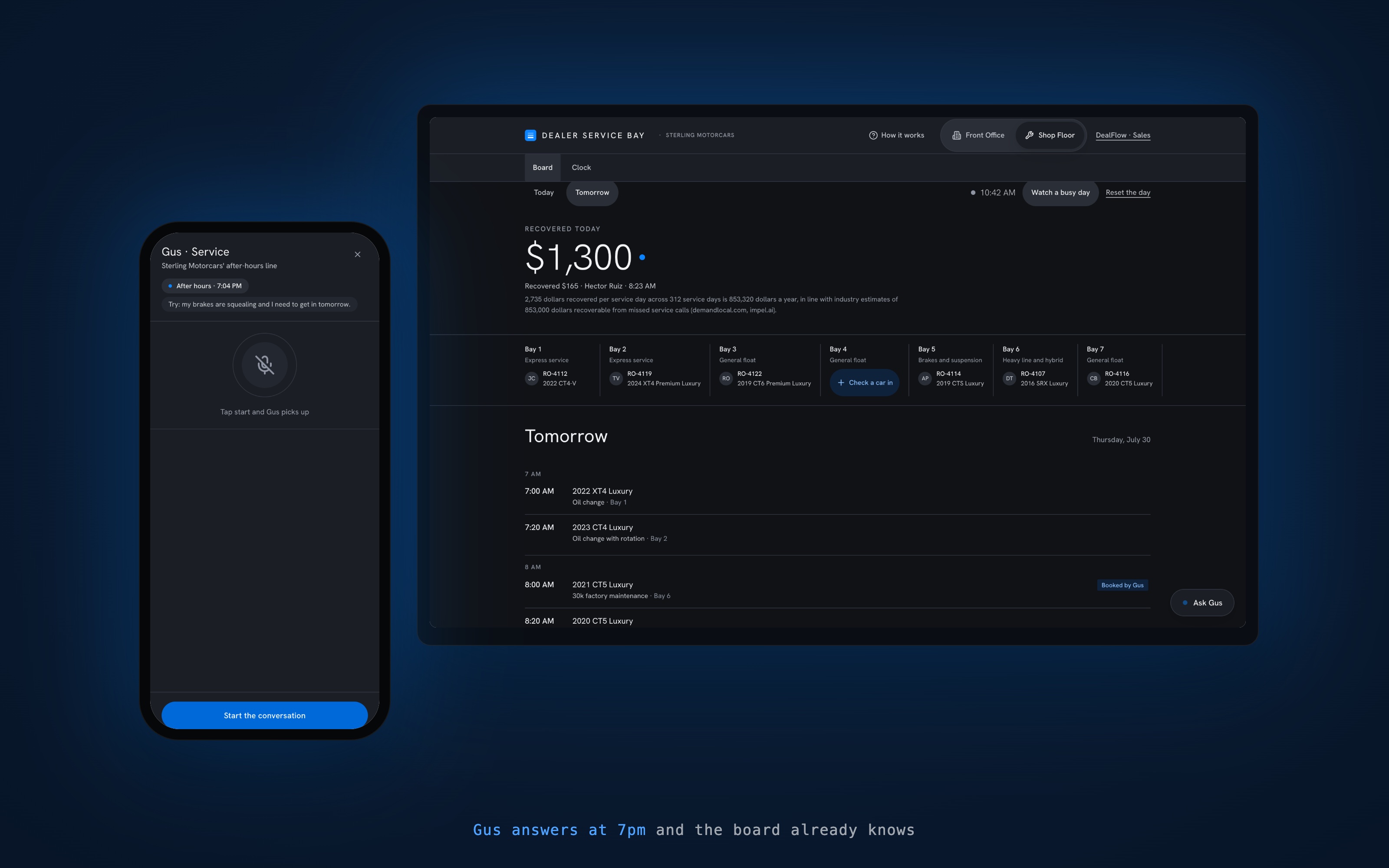
Gus, After Hours · Booked by Gus, server-validated
7:04 PM: Gus answers the dark store's phone and the booking lands on tomorrow's schedule against real slot availability.
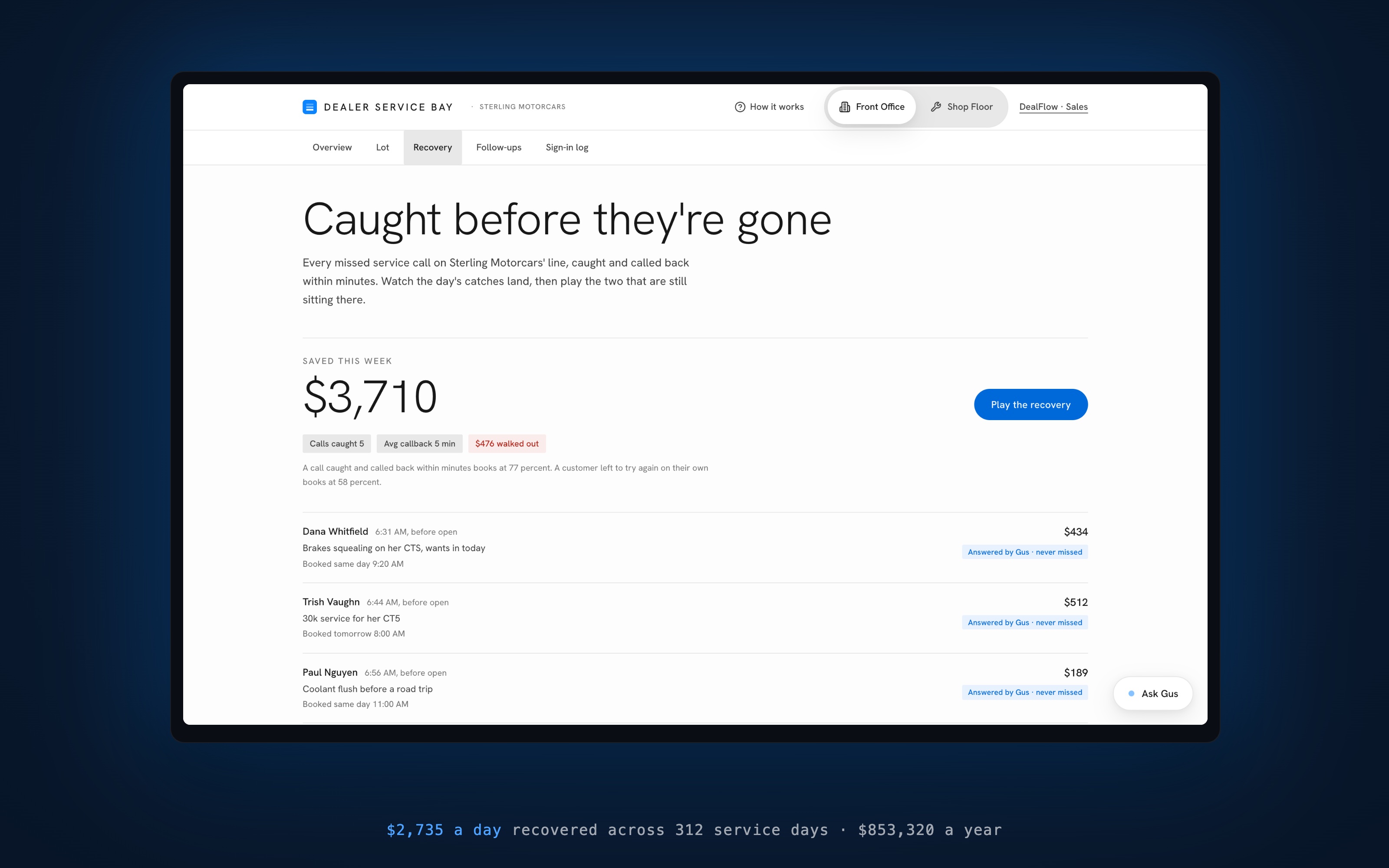
The Recovery Queue · $3,710 saved this week
Calls caught before open and called back in five minutes, each one priced so the store can see what it almost lost.
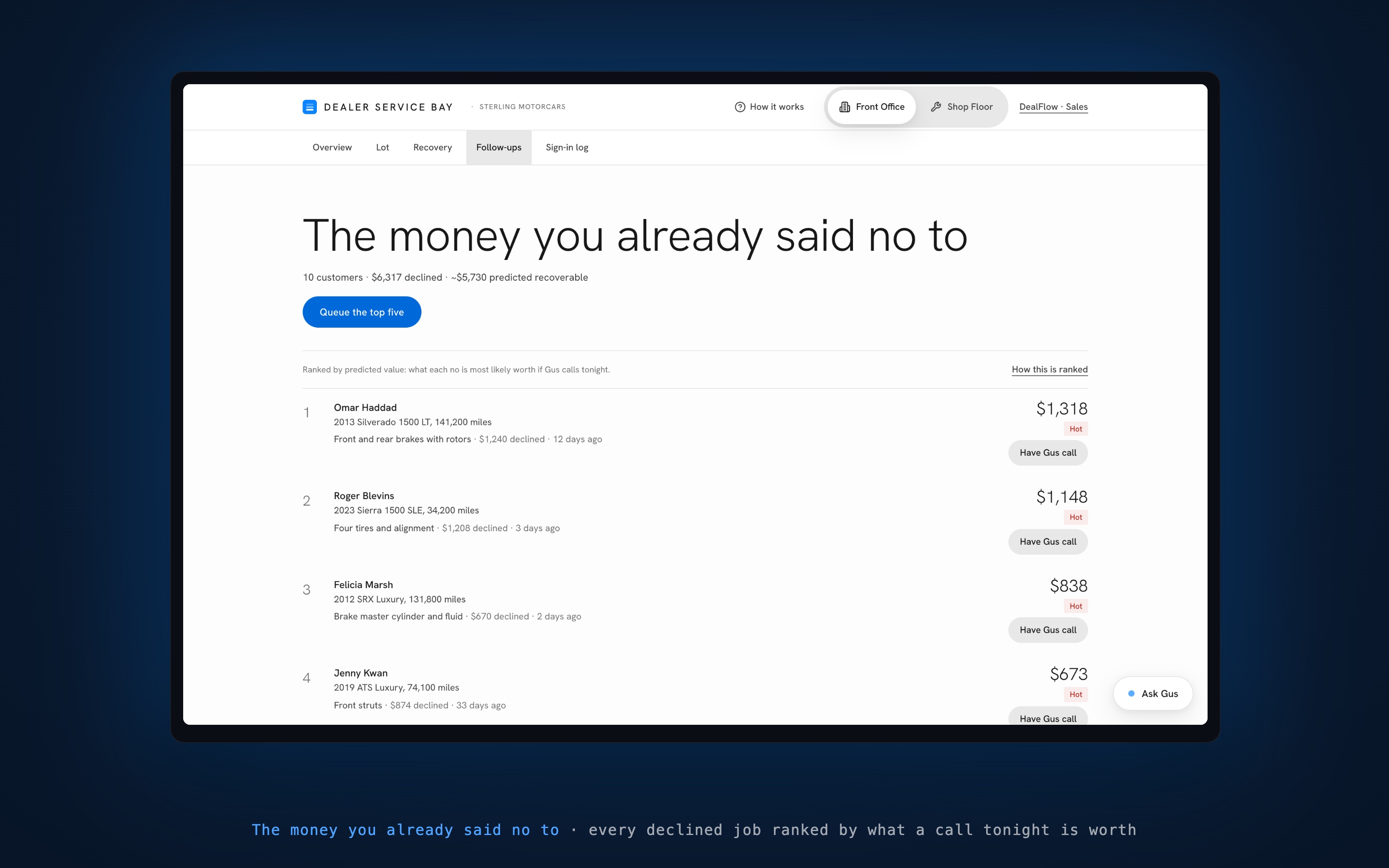
The Follow-ups · $5,730 predicted recoverable
The money the customer already said no to: every declined service ranked by its predicted value if Gus calls tonight.
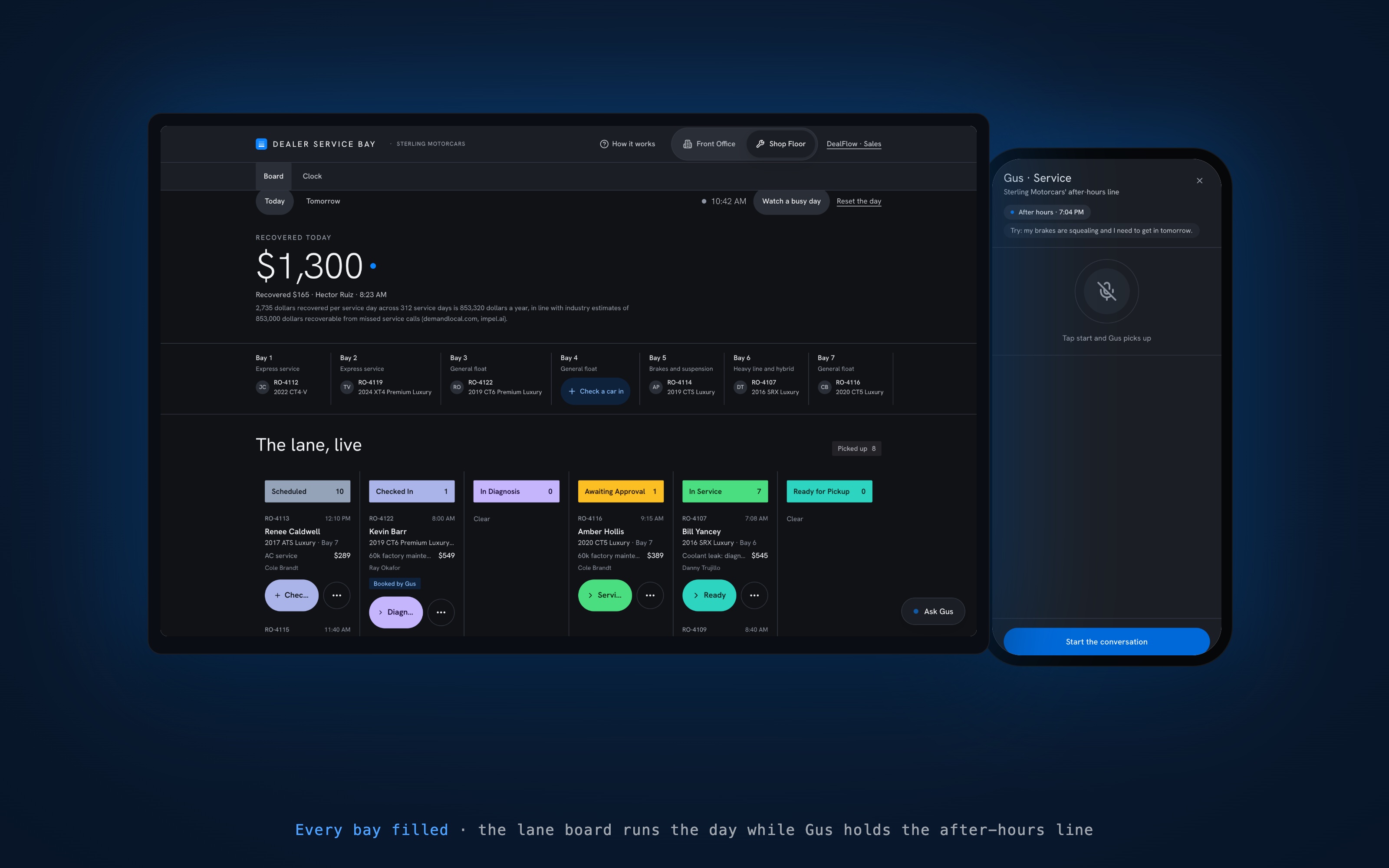
The Product · Two workspaces, one design system
The light Front Office and the dark Shop Floor share one design language, with every stage color passing WCAG AA contrast in both themes.
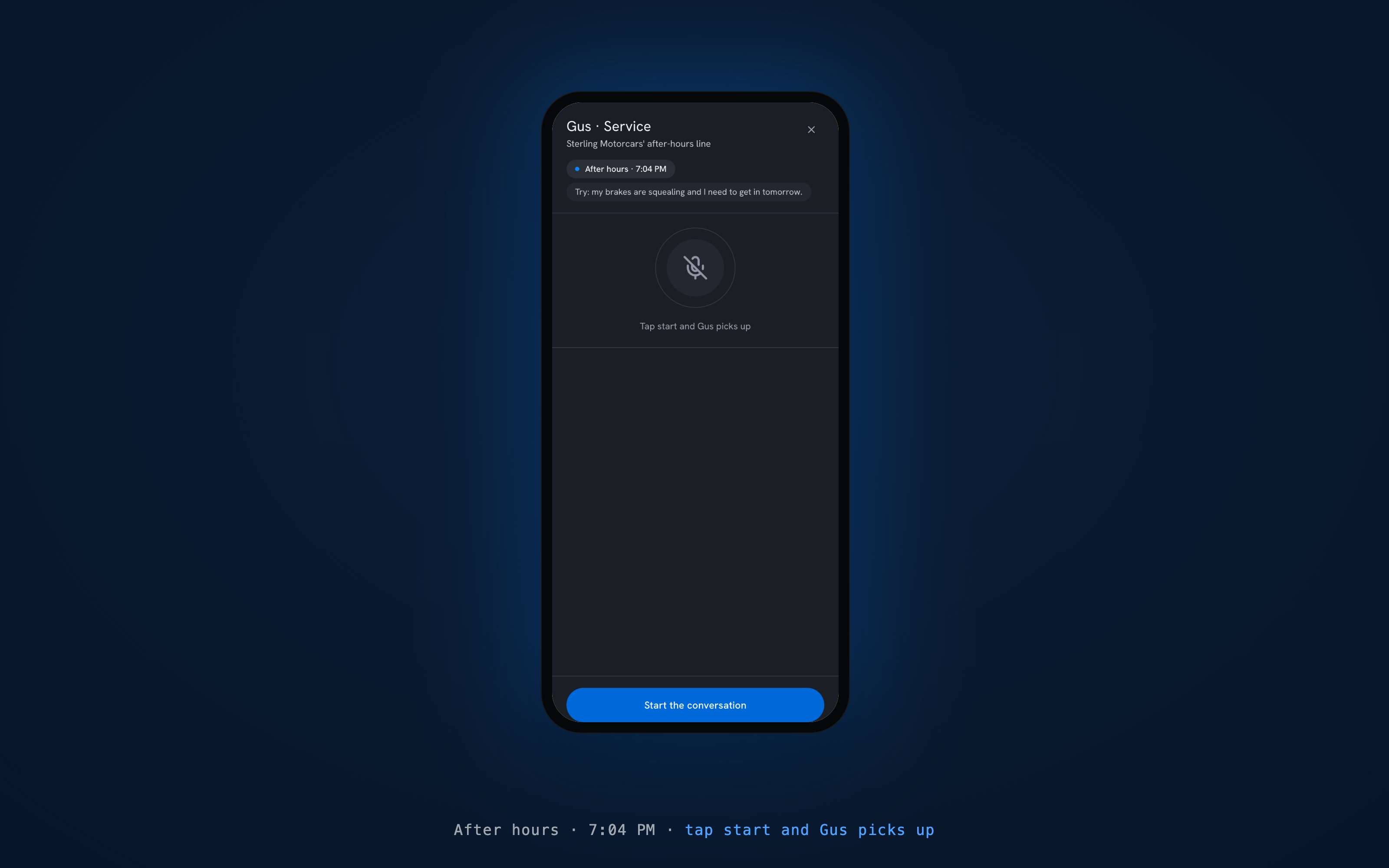
The AI Moment
At 7:04 PM a customer with squealing brakes calls a closed service department. Gus answers, quotes the job from server-priced services, reads real availability on the slot grid, and books the first open bay on tomorrow's schedule. The appointment is a real row in the store's database, validated by the same server the lane board reads, and the morning advisor finds the ticket already written.
$853,320
Per lane a year, industry benchmark
33%
Set rate lift, industry benchmark
The Voice Agent
Gus runs on four tools validated by the store’s own server. Prices come from the service catalog, times come from the live slot grid, and every booking is re-checked at the moment it is written, so he cannot promise what the schedule cannot keep.
The one thing he writes: a real appointment. It lands on the Tomorrow board flagged Booked by Gus, opens a scheduled repair order, and moves the recovered-revenue ticker. Everything else Gus does is read-only.
Try It Yourself
Gus can only quote prices his server returns and only offer times that are actually open on the schedule. Open the app, tap Ask Gus, and run these five calls.
Every booking Gus makes is a real row in the store’s database, flagged as a demonstration booking so the day can be reset. Prices and times come from the server, never from the model.
The Film
A day in the service lane, filmed like a commercial: the morning walk-in, the front counter, the car coming down off the lift.
Tap to play · produced by Agentify AI for the demonstration store
The Outcomes
30
Repair Orders, One Living Day
Ten bays, six color-blocked lanes, and thirty repair orders move through one day at the demonstration store, with the recovered ticker running at the top.
14
Missed Calls, Caught and Priced
Every call the store never picked up is caught, called back within minutes, and priced: $3,710 saved this week on the recovery queue.
$434
From One After-Hours Call
One caller with squealing brakes reached Gus instead of voicemail, and the booking was on the schedule before the doors opened.
The demo ticker closes at $2,735 a day. Annualized, that models the industry benchmark: $853,320 per lane.
We will walk through Dealer Service Bay live, then map what the same system looks like on your service lane, your phones, and your follow-up list.